I started assembling the following material around August 2022 for a piece I was writing at the time for The Conversation about my first interactions with Midjourney in the essay, Synthetic futures.
I will keep adding to this resource as I compose the curatorial essay and ponder the relentless push towards cultures of automation.
In the meantime, check out another active resource produced by the good folks at Unthinking Photography who curate a Tumblr-style archive of current debates around AI art practices and generative culture.
/////
Midjourney is the text-to-image synthesis service I used for this project. If you would like to experiment yourself, it is currently accessible via Discord. It’s social, it’s collaborative, it’s a mega-remix of visual culture. You can find me there @ Oldmateo#5185.
Annotated Links
Why Midjourney?
For the literary and cultural potential of text-to-image technologies I would recommend Dean Kissick’s Spike article, The Downward Spiral: Text-to-Image.
To get a quick understanding of Midjourney – as opposed to its competitors DALL-E, Stable Diffusion and more recently Adobe Firefly – Steve Hughes has a good take on what differentiates Midjourney in his piece for BBC Science Focus, Midjourney: The gothic AI image generator challenging the art industry.
Also worth a look is Emergent Garden‘s video intro, Evolving AI Art, that neatly summarizes the iterative nature of AI image production.
Bruce Sterling is at his brilliant best in his examination of the gen-art field for Eindhoven University of Technology conference, AI for All: From the dark side to the light (text / video).
Prompting
If you are keen on the technology behind prompts – Generative Artificial Intelligence (GAI) and natural language processing (NLP) – and how they are being deployed by users, see Lulia Turc’s analysis, Crafting Prompts for Text-to-Image Models. She also links to a more in-depth analysis of the code and the data on prompts being used over on kaggle – if you’re into that sort of thing.
There are many guides to prompting including helpful web forms and dynamic spreadsheets. There are also guides to very specific techniques, like this post on generating “solid gold Star Wars helmets” by Linus Ekenstam that uses his dynamic prompting technique.
Of course everything is currently in flux, just how interventionist regulators and individuals can be with algorithms that are themselves carefully guarded corporate property remains to be seen. (Although much has been written by the data scientists that build them, with a growing number of resources to help programmers build their own workflows).
Is this art?
The headlines getting traction on most news sites tends to focus on the ‘but, is this art?’ debate. This is not a new question. For some deeper theoretical back-grounding, see Aaron Hertzman’s Computers Do Not Make Art, People Do and a recent thoughtful essay by Rosemary Lee, Art Involving Computation v Computational Art.
Like most autonomous systems trained on existing data sets, these black-box systems are prone to racist outputs and amplify misinformation, inequality and prejudice embedded within them. We clearly need to do better – this will involve a whole of society and a whole of government response. This should be in collaboration with the corporations and institutions who accelerate development and innovation in this space …
The big steal
The U.S. Copyright Office has declared A.I. art doesn’t warrant copyright protection because the outcomes lack “human authorship”. There is a flurry of debate currently about who owns what (both the outcome and the data source) and the efficacy of generative modes of art making. Wired has suggested published images may reside in the public domain ‘where everyone and no one “owns” them.’ While Engadget takes a deep dive into the debates around copyright and the perils of using large Internet data sets (like Shutterstock or Flickr via Google Images) asking whether the resulting A.I. art works are ‘borrowed or stolen’?
The ethics of using text-to-image synthesis services like Midjourney which are trained on large data sets of visual culture – including the work and techniques of living artists and designers – is an ongoing debate that merits deeper investigation. Kyle Chayka, writing in The New Yorker, documents the case filed against Midjourney and two other A.I. imagery generators, Stable Diffusion and DreamUp by artists who insist their creative IP has been exploited in the article, Is AI Art Stealing from Artists?
And just in case you are wondering, artist Mathew Dryhurst and musician Holly Herndon have created a search tool Have I Been Trained? This will help you find out if your image or your creations or images you have shared to the web have been hoovered up to serve these large training data sets.
At The Verge, James Vincent points to the messiness ahead in his article, The scary truth about AI copyright is nobody knows what will happen next, which very much gets to the nub of this debate, citing several key cases currently in front of the courts.
The tech
Way back in April 2022 … the MIT Technology Review took a look at DALL-E and decided it was not whether we should question the artistic merit but rather what we mean by “intelligence” in relation to these A.I. assisted processes in Will Douglas Heaven’s article This horse-riding astronaut is a milestone in AI’s attempt to make sense of the world
Eryk Salvaggio has a great blog on Medium called Cybernetic Forests, he has written a number of very thoughtful pieces on AI including one on the embedded entropy of photographs and the diffusion model used by DALL.E (Ghosts of Diffusion) and another on the datafication of kissing which interrogates the training data sets (How to Read an AI Image).
For the big picture of the technology, Ross Dawson has compiled an extensive recent history of generative text-to-image algorithms and thereby foregrounding the near future (across both the still and moving image) in his lengthy analysis, The Future Of AI Image Synthesis.
The Science
The machine learning territory is expansive and there are many pathways to where we find ourselves today. There are of course many classic goto citations, including: ImageNet Classification with Deep Convolutional Neural Networks by Krizhevsky, Sutskever & Hinton (2012), DeepFace: Closing the Gap to Human-Level Performance in Face Verification by Taigman, et al (Meta, 2014), General Adversarial Nets by Goodfellow, et al (2014) and my favourite characterisation of unsupervised networks, Greedy Layer-Wise Training of Deep Networks by Bengio, et al (2009).
Fortunately, the web is an archive, and just like in the domains of cinema and pop music, data science “best of” lists abound including Dan Turkel’s pretty exhaustive list on GitHub and for those of you looking for something a little different I recommend Andrew Ye’s 24 Really Fucking Interesting Deep Learning Papers (July 2022).
Further down the rabbit hole
This is a link-dump of articles that have stood out over the last year or so pertaining to AI text-image services. When I have time I will generate a more academically sound reference list …
Unthinking Photography – Artificial Intelligence
https://unthinking.photography/tags/artificial-intelligence
This horse-riding astronaut is a milestone in AI’s attempt to make sense of the world
https://www.technologyreview.com/2022/04/06/1049061/dalle-openai-gpt3-ai-agi-multimodal-image-generation/
AI Art Is Here and the World Is Already Different
https://nymag.com/intelligencer/2022/09/ai-art-is-here-and-the-world-is-already-different.html
Ghosts of Diffusion
https://cyberneticforests.substack.com/p/ghosts-of-diffusion
ChatGPT is a Blurry JPEG of the Web
https://www.newyorker.com/tech/annals-of-technology/chatgpt-is-a-blurry-jpeg-of-the-web
Generative AI Is a Disaster, and Companies Don’t Seem to Really Care
https://www.vice.com/en/article/88xdez/generative-ai-is-a-disaster-and-companies-dont-seem-to-really-care
DALL·E can generate whatever you want, as long as you know the right incantation
https://technoblender.com/the-future-of-crafting-prompts-for-text-to-image-models-by-iulia-turc-jul-2022
A jargon-free explanation of how AI large language models work
https://arstechnica.com/science/2023/07/a-jargon-free-explanation-of-how-ai-large-language-models-work/
Introduction to Diffusion Models for Machine Learning
https://www.assemblyai.com/blog/diffusion-models-for-machine-learning-introduction/
DALLE, AARON, Kata: Strategies for Legibility
https://cyberneticforests.substack.com/p/dalle-aaron-kata-strategies-for-legibility
Prompt Analysis
https://www.kaggle.com/code/succinctlyai/midjourney-prompt-analysis/notebook
AI Art Is Challenging the Boundaries of Curation
https://www.wired.com/story/dalle-art-curation-artificial-intelligence/
Give this AI a few words of description and it produces a stunning image – but is it art?
https://theconversation.com/give-this-ai-a-few-words-of-description-and-it-produces-a-stunning-image-but-is-it-art-184363
Why Machines Don’t Create Value
https://cosmonautmag.com/2021/10/why-machines-dont-create-value/
Computers Do Not Make Art, People Do
https://cacm.acm.org/magazines/2020/5/244330-computers-do-not-make-art-people-do/fulltext
Exploring 12 Million of the 2.3 Billion Images Used to Train Stable Diffusion’s Image Generator
‘A.I. Should Exclude Living Artists From Its Database,’ says artist. https://news.artnet.com/art-world/a-i-should-exclude-living-artists-from-its-database-says-one-painter-whose-works-were-used-to-fuel-image-generators-2178352
Plagiarism by Machine
https://www.bloomberg.com/news/newsletters/2022-08-16/dall-e-and-midjourney-and-the-future-of-ai-art-generation
Generative AI Has an Intellectual Property Problem
https://hbr.org/2023/04/generative-ai-has-an-intellectual-property-problem
Is A.I. Art Stealing from Artists?
https://www.newyorker.com/culture/infinite-scroll/is-ai-art-stealing-from-artists
How AI is hijacking art history
https://theconversation.com/how-ai-is-hijacking-art-history-170691
Digital Futures – The AI Design Revolution
https://youtu.be/ButDfjQohB0
Daydreams Become a Reality
https://campaignbrief.com/daydreams-become-a-reality-tda-launches-new-addictive-web-based-game-daydreams/
An Experimental Horror ARG is Testing the Boundaries of A.I. Art
https://www.theverge.com/design/23206001/midjourney-ai-art-horror-arg-game-rob-sheridan
AI systems can’t patent inventions, US federal circuit court confirms
https://www.theverge.com/2022/8/8/23293353/ai-patent-legal-status-us-federal-circuit-court-rules-thaler-dabus
John Oliver is weirdly popular on SF-based AI image app Midjourney
https://www.sfgate.com/streaming/article/hbo-john-oliver-ai-midjourney-17374718.php
Meta’s ‘Make-A-Scene’ Tech Is Pushing the Boundaries of AI-Generated Art
https://www.artnews.com/art-news/news/meta-ai-make-a-scene-pushes-generative-art-1234634405/
The Future Of AI Image Synthesis
https://rossdawson.com/futurist/implications-of-ai/future-of-ai-image-synthesis/

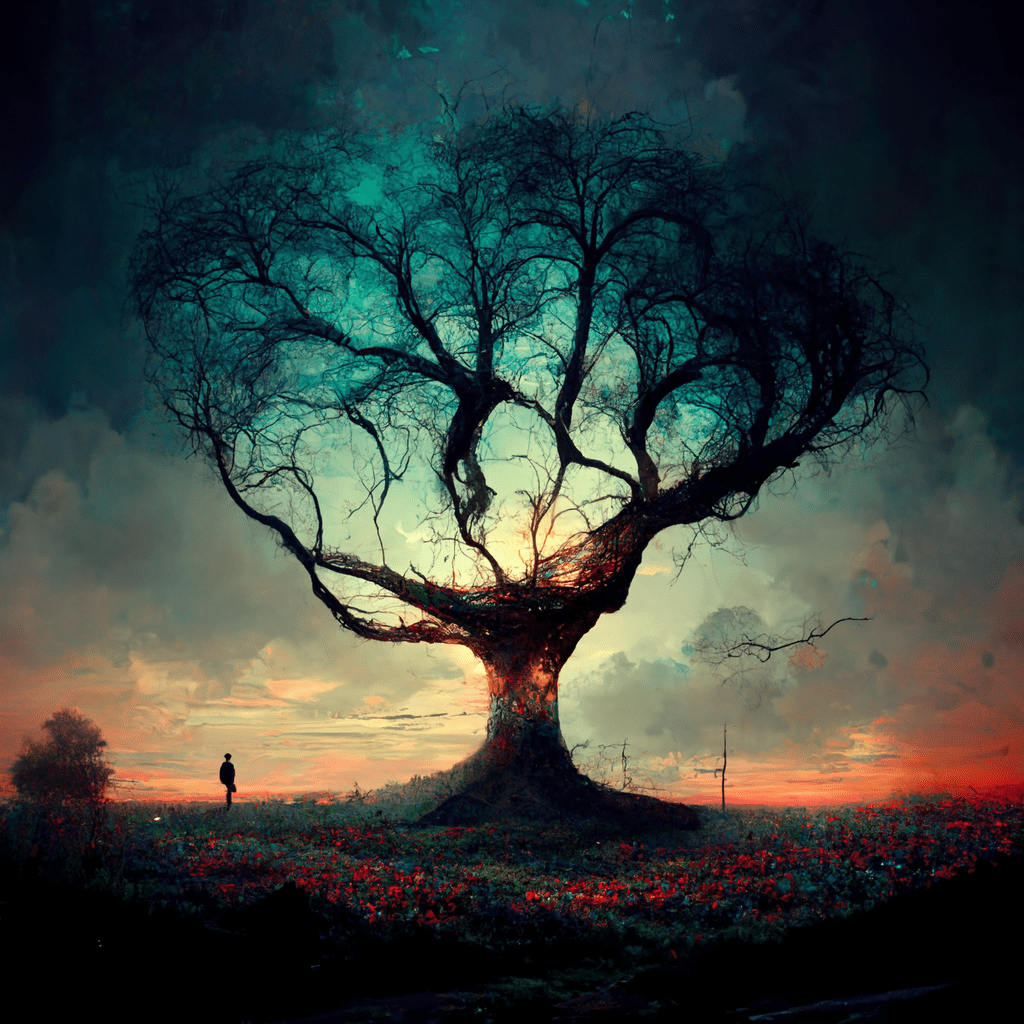
MidJourney Job ID #a314ee16-9100-4342-a4f9-9827799eb421
Get in touch
Thank you for your response. ✨

 Slow Down Time